How Much Does an ADU Cost in Colorado Springs?
Most detached accessory dwelling units (ADUs) in Colorado Springs cost roughly $185,000 to $420,000 to build, based on price ranges local builders published in 2024 through 2026. Garage conversions run roughly $80,000 to $150,000, and finishing an existing basement or interior space into an ADU typically lands between $100,000 and $200,000. This guide breaks down where that money goes, what the city, the building department, and the utility actually charge (with the official fee schedules cited), how homeowners finance a build, and what the rental math honestly looks like. It applies to properties inside Colorado Springs city limits; rules in unincorporated El Paso County differ, so verify with county planning if you are outside the city.
ADU costs by type
The single biggest cost decision is the type of ADU. Every figure below is a local builder's published estimate, not a measured market survey, so treat the ranges as a starting point for budgeting rather than a quote.
| ADU type | Typical cost (local builder estimates, 2024 to 2026) |
|---|---|
| Basement or interior conversion | $100,000 to $200,000 |
| Garage conversion | $80,000 to $150,000 |
| Detached new build | $185,000 to $420,000 |
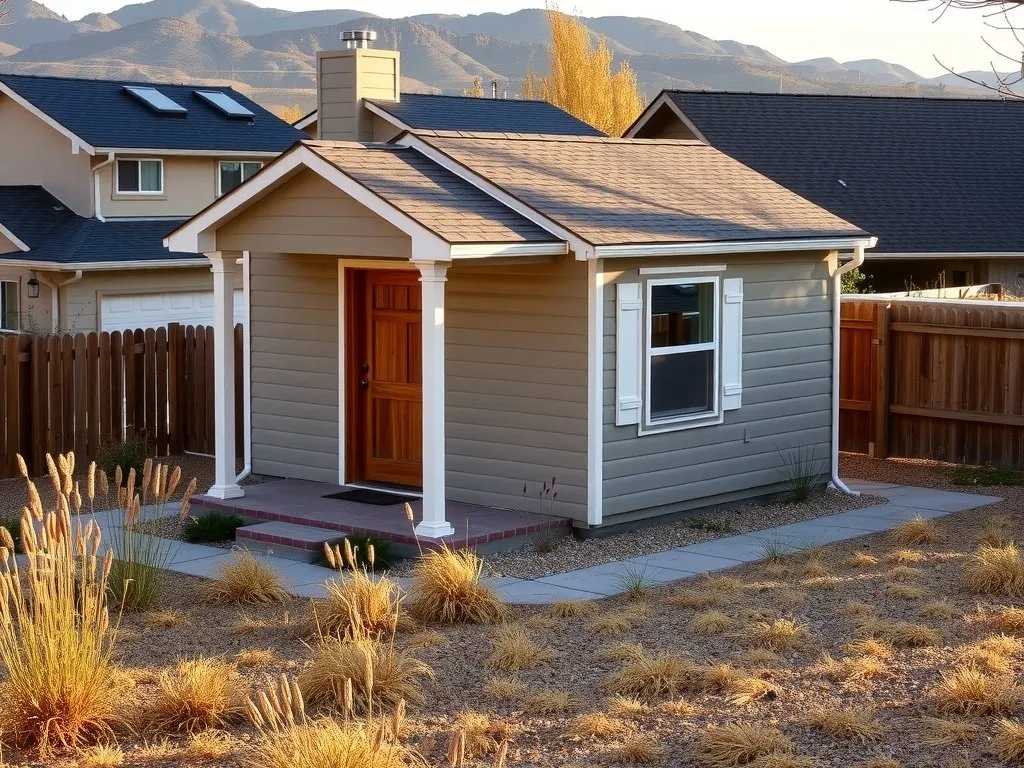
On a per-square-foot basis, Colorado Springs builders quote detached new construction at roughly $325 to $375 on the low end, $400 to $500 for a typical project, and $500 to $650 for complex sites or high-end finishes. Modular construction tends to come in lower than stick-built; one local builder prices modular studios around $150,000 to $190,000 (about 245 square feet) up to $300,000 to $350,000 for a 735-square-foot two-bedroom, with stick-built running 15 to 25 percent more. For comparison, the only large academic dataset on ADU costs (a 2021 UC Berkeley survey of 752 California ADU owners) found a median total cost of $150,000 at $250 per square foot, though that is a different market and construction costs have risen since.
What drives the cost
Roughly 80 to 90 percent of an ADU budget is hard cost: the structure and its finishes. Soft costs (design, engineering, permits, and fees) typically run 10 to 20 percent of the total. The line items below are local builder estimates for a detached build:
- Foundation: $15,000 to $50,000, heavily dependent on soils and slope
- Site preparation and excavation: $5,000 to $40,000
- Utility trenching and connections: $5,000 to $15,000 for straightforward runs; sewer upgrades can push much higher
- Architecture and design: $2,000 to $18,000
- Structural and mechanical engineering: $1,000 to $12,000
- Soils testing: $1,500 to $2,500
- Survey or improvement location certificate: $1,500 to $4,000
- Interior finishes: $35,000 to $80,000, with the kitchen and bathroom dominating
- Contingency: plan 10 to 15 percent on top of the bid
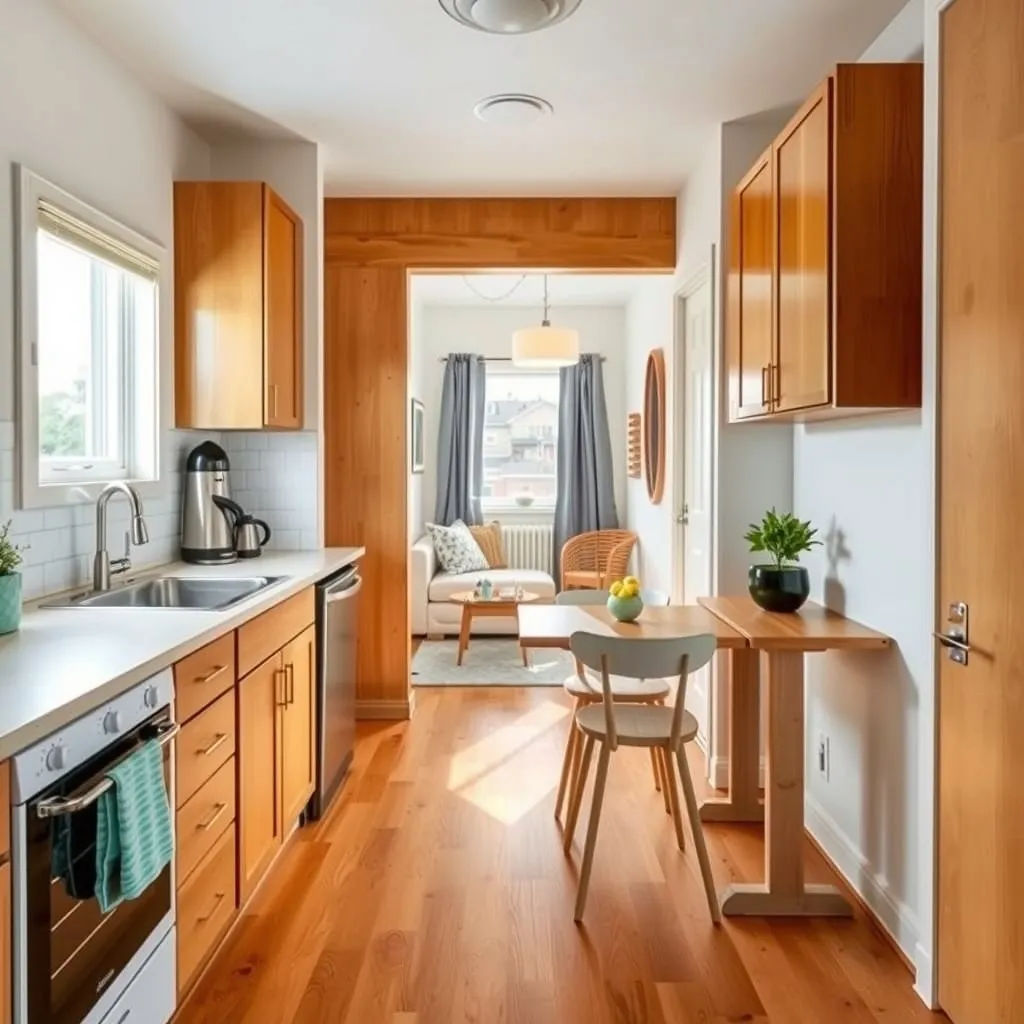
Two of these deserve special attention in Colorado: soils (expansive clays are common along the Front Range and can move foundation costs significantly) and utilities, which get their own section below because the fees are set by the city's utility, not your builder.
Permits, taps, and city fees: the official numbers
This is the part of the budget most cost articles wave at vaguely. The actual schedules are public, so here they are, checked against the official sources in August 2026.
Building permit and plan review (PPRBD)
The Pikes Peak Regional Building Department calculates permit fees on a sliding scale based on project valuation, and PPRBD sets that valuation using a per-square-foot method (currently about $45.65 per square foot for new dwelling space), not your contract price. Worked example, computed from the published fee table: a 1,000-square-foot detached ADU values out near $45,650, which puts the building permit fee around $430, plus plan examination at 28 percent of the permit fee (about $120). Mechanical and plumbing permits add roughly $30 to $75 each. These are ballpark figures; PPRBD publishes an official fee calculator that will estimate your exact project.
City fees (Ordinance #25-45 projects)
- DRE plan review: $180 for new residential (2026 schedule)
- Citywide Development Impact fee: $766 per unit (2026)
- Park fee in lieu (PLDO): $2,155 per unit (effective July 2025)
- School land dedication: calculated at permit from district land values; no flat fee is published
- Public notice: the city requires notice posted along your street frontage for 14 days before the building permit issues. The city confirms ADUs are not exempt from impact fees.
Utility connections (Colorado Springs Utilities)
Whether your ADU can share the main house's water and sewer service or needs its own connection is decided case by case: the permit package requires an "Ability to Serve" determination from Colorado Springs Utilities. The difference matters more than any other fee. If a new separate water connection is required, the 2025 development charge schedule puts the water development charge plus water resource fee at roughly $9,000 to $14,000 for common lot sizes (higher on large lots, and 50 percent higher outside city limits), plus a wastewater development charge of $1,868, a $160 wastewater permit, a $525 water tap, and a $585 electric connection. If shared service is approved, most of that drops away. One timing rule worth knowing: once you pay development charges, you must pull the building permit within 120 days or reapply at current rates. Confirm current figures with Utilities before you budget, since the published schedule is dated January 2025.
Adding it up: the city and building-department side typically totals about $3,700 to $4,000, and utilities range from a few hundred dollars to $16,000 or more. That matches what local builders warn: permits and tap fees are real money, and they are often excluded from a first bid. When you are comparing bids from any ADU builder in Colorado Springs, ask specifically whether government fees and utility charges are included.
How homeowners finance an ADU
There is no special "ADU mortgage," but several standard routes fit a $100,000 to $250,000 project:
- HELOC or home equity loan: borrow against existing equity, either as a flexible credit line (useful for paying construction draws) or a fixed lump sum.
- Cash-out refinance: replace your mortgage with a larger one and take the difference. Note that FHA rules do not allow projected ADU rent to help you qualify for a cash-out refinance.
- Renovation loans: FHA's Standard 203(k) program explicitly covers adding an attached ADU, and Fannie Mae's HomeStyle Renovation loan can finance constructing a new ADU on a single-family property. Ask lenders specifically about detached new builds, which FHA's list does not name.
- The FHA rental-income rule: since late 2023, FHA lets lenders count a portion of expected ADU rent toward your qualifying income: 75 percent of appraiser-estimated market rent for an existing ADU, or 50 percent when a 203(k) loan is building the ADU, capped at 30 percent of total qualifying income and requiring two months of reserves.
Colorado also created state ADU financing (an $8 million loan and interest-rate-buydown program through CHFA, funded by the same 2024 law that legalized ADUs statewide). The catch: it is only available in jurisdictions certified by the state as "ADU Supportive," and as of August 2026 Colorado Springs is not on the certified list (nearby Monument is). The list updates regularly, so it is worth rechecking before you talk to lenders. The state's ADU grant program, despite the name, funds local governments rather than homeowners.
The rental math, honestly
First, the rule that changes the investment case: under Ordinance #25-45, a Colorado Springs property with an ADU cannot receive a new short-term rental permit (existing combinations before June 30, 2025 are grandfathered). A new ADU is a long-term rental, full stop.
What does long-term rent look like? As of August 2026, the median 1-bedroom rent in Colorado Springs is about $1,113 per month (Apartment List), and HUD's Fair Market Rent for the metro for fiscal 2026 is $1,196 for a studio and $1,464 for a 1-bedroom, utilities included. A defensible planning range for a 1-bedroom ADU is roughly $1,100 to $1,450 per month.
Run that against the build cost and be honest with yourself: $1,200 a month is $14,400 a year gross against a project that likely costs $200,000 or more. As pure yield, that is a long payback. The stronger cases are the combined ones: housing a family member while the unit builds equity, offsetting a mortgage with rent, and the property-value effect below. If a seven-year payback is the only thing that would make the project worth it to you, an ADU is probably the wrong instrument.
Do ADUs add property value?
You will see claims online that an ADU "adds 20 to 35 percent" to home value. No rigorous source backs a number like that, and we could not verify one. The best federal data available (a January 2025 FHFA analysis of California appraisals from 2013 to 2023) found that homes with ADUs appraised substantially higher than homes without, and appreciated faster (9.3 percent versus 7.7 percent annualized). That is California, and it is correlation rather than a guaranteed premium, but the direction is consistent: appraisers and the mortgage system now formally recognize ADU rental income, and homes with ADUs are worth more. There is no Colorado-specific study yet.
Budgeting a real project: a sequence that works
- Feasibility first: confirm your zoning and size limits (the city allows an ADU up to 50 percent of the primary home's size or 1,250 square feet, whichever is less, with a 750-square-foot allowance for smaller homes), and ask Colorado Springs Utilities about service early, since the tap question can swing the budget by $15,000.
- Design and engineering: budget $5,000 to $20,000 for plans, structural work, soils testing, and survey before anyone breaks ground.
- Collect comparable bids: when you get to hiring a licensed ADU contractor, get line-item bids that state whether permits, tap fees, and utility work are included, and verify the license. Anyone building a habitable ADU here needs a PPRBD Class C (Home Builder) license, and you can verify a contractor's PPRBD license through the department's public lookup.
- Hold a contingency: 10 to 15 percent, separate from the bid, and resist spending it early.
- Mind the clock: PPRBD publishes its live plan-review queue on its homepage, so you can see current turnaround before you submit rather than relying on rules of thumb. Total project timelines from design to move-in commonly run 6 to 12 months.
Frequently asked questions
How much does a garage conversion ADU cost compared to a detached ADU?
Local builders publish garage conversion estimates of roughly $80,000 to $150,000, while detached new-build ADUs generally run $185,000 to $420,000. Conversions reuse an existing foundation, roof, and (often) utility connections, which is where most of the savings come from.
How much are ADU permits and fees in Colorado Springs?
Plan on roughly $3,700 to $4,000 in city and building-department fees (PPRBD permit and plan review, DRE plan review, citywide impact fee, park fee), plus utility charges that range from a few hundred dollars up to $16,000 or more if Colorado Springs Utilities determines your ADU needs its own water and wastewater connection. School land dedication is calculated separately at permit.
Can I rent my Colorado Springs ADU on Airbnb?
No. Under Ordinance #25-45, a property with an ADU cannot receive a new short-term rental permit (combinations that existed before June 30, 2025 are grandfathered). The rental case for a new ADU is long-term tenancy, where 1-bedroom rents in Colorado Springs currently run roughly $1,100 to $1,450 per month.
Does a detached ADU need its own utility taps?
It depends. Colorado Springs Utilities makes a case-by-case "Ability to Serve" determination during permit review. Some ADUs share the primary home's service; others are required to add a separate connection, which can add roughly $9,000 to $16,000 or more in development charges and fees.
Sources
- PPRBD Fee Schedule (effective June 30, 2025) and the PPRBD Fee Calculator
- City of Colorado Springs ADU page and current fee schedules (DRE, Citywide Development Impact, PLDO)
- Colorado Springs Utilities 2025 Development Charges and Fees
- HUD Mortgagee Letter 2023-17 (ADU rental income and 203(k) rules) and the Fannie Mae HomeStyle Renovation guide
- Colorado DOLA: ADU Supportive Jurisdictions and CHFA ADU Finance Programs
- Apartment List Colorado Springs Rent Report (August 2026) and HUD Fair Market Rents FY2026
- FHFA: Trends in appraised value for properties with ADUs (January 2025)
- UC Berkeley Terner Center statewide ADU survey (2021)
- Local builder price ranges: Olerra, Southern Mesa, Giudice Builds